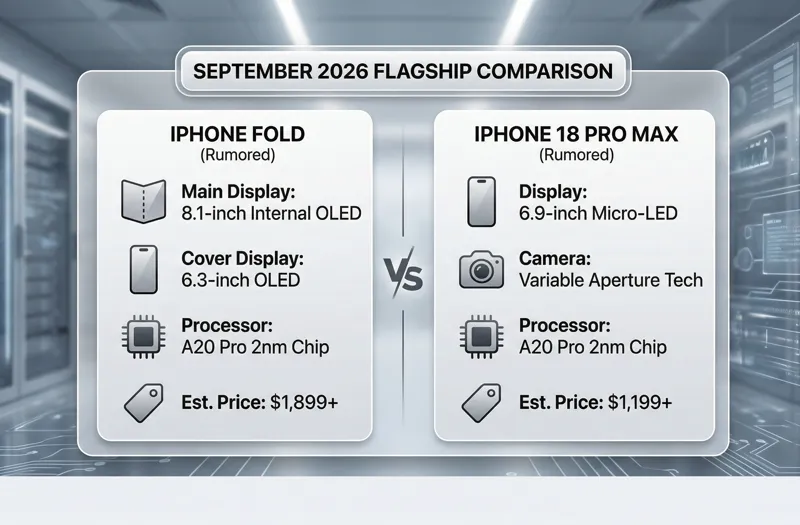
Let’s address the elephant in the room right away: apples iphone fold dummies look horrible in these leaked photos circulating across the tech sphere in early 2026. However, as any seasoned tech analyst or consumer electronics expert will tell you, early stage prototypes, dummy units, and 3D-printed mockups rarely reflect the polished, premium feel of a final consumer product. The real narrative hidden beneath these unrefined aesthetics is the underlying design philosophy they reveal. The manufacturer is seemingly bypassing the standard “tall and narrow” phone-first approach and aiming directly for an experience that mirrors a compact tablet.
The Shift to a True Tablet Experience
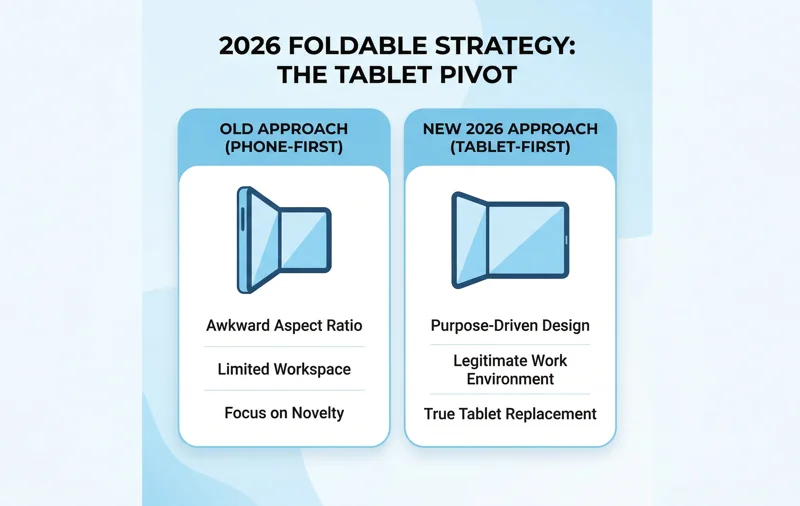
It is definitely the smartest play for a new entry into the foldable market. The current landscape is saturated with devices that are essentially just heavy phones that open into slightly awkward, nearly square displays. If the upcoming device genuinely unfolds into something with the dimensions and feel of the original iPad mini, it entirely redefines its utility. We are moving away from novelty and stepping firmly into the realm of true dual-purpose hardware.
The future of foldables lies not in making phones bigger, but in making tablets truly pocketable for the modern professional.
Why the Tablet Replacement Strategy Works
There are several critical reasons why targeting the tablet form factor, rather than just expanding a smartphone screen, is a winning strategy for 2026 and beyond.
Purpose-Driven Unfolding
Instead of opening the device simply to get a slightly larger social media feed, moving to a true 4:3 aspect ratio creates a legitimate workspace for reading, reviewing documents, and multitasking. It transforms the device from a media consumption tool into a content creation powerhouse. For users who need to analyze spreadsheets, review lengthy PDFs, or manage complex software interfaces on the go, this aspect ratio is a game-changer.
The Competitor Ripple Effect
It is telling that the broader industry is already reacting. Rumors surrounding Samsung’s upcoming Galaxy Z Fold Wide point to a direct pivot to match this exact tablet-like footprint, deliberately moving away from the narrower dimensions of their standard Z Fold lineup. When the market leaders pivot their entire flagship strategy to match a rumored design, it validates the 4:3 tablet-replacement concept.
| Form Factor Strategy | Primary Benefit | Target Audience |
|---|---|---|
| Standard Foldable (Narrow) | Easier one-handed grip when closed | Casual users, media consumers |
| Tablet-Style (4:3 Aspect) | Superior multitasking and document editing | Professionals, creators, power users |
Productivity First
For anyone managing multiple projects, analyzing websites, or executing content workflows, having a truly pocketable tablet is infinitely more valuable than just an oversized phone screen. Imagine managing complex SEO campaigns, checking analytics dashboards, or editing code side-by-side without needing to unpack a laptop. This level of mobile productivity is what justifies the premium price tags associated with these devices.
The Underlying Challenge
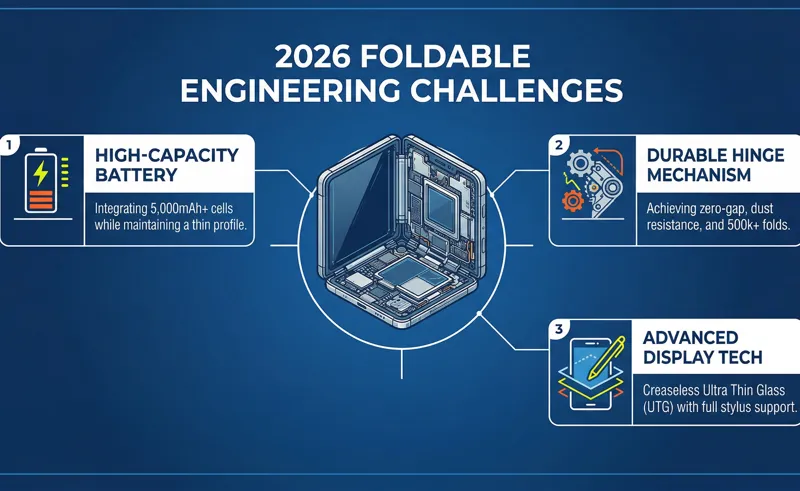
The main hurdle will inevitably be the software execution and the physical hardware trade-offs. Delivering a premium unfolded experience often means grappling with increased device thickness to accommodate larger batteries—like the 5,000mAh cells rumored to be necessary for these wider flagships—while ensuring the operating system can seamlessly handle split-screen multitasking without feeling cramped. The hardware must meet strict official quality standards to ensure durability over thousands of folds.
Success in the 2026 foldable market requires a flawless marriage of high-capacity battery technology with an ultra-thin, durable hinge mechanism.
| Component | 2026 Market Expectation | Engineering Challenge |
|---|---|---|
| Battery | 5,000mAh or higher | Maintaining thin profile while avoiding heat buildup |
| Hinge | Zero-gap, dust resistant | Durability for 500,000+ actuations |
| Display | Creaseless UTG (Ultra Thin Glass) | Minimizing glare and improving stylus support |
Given the expected price tags and these wider, tablet-style proportions, do you think a device like this could completely replace a dedicated tablet or laptop in your daily workflow, or would it still serve primarily as a supplementary screen? For many professionals, if the software is optimized correctly, it might just be the only device they need to carry.
Frequently Asked Questions (FAQs)
Why do leaked dummy models of upcoming phones often look so bad?
Dummy models are usually rapidly prototyped using basic materials like cheap plastic or 3D-printed resin. They are designed purely to test dimensions for case manufacturers, not to showcase the final premium finish, glass, or polished metals of the actual device.
What is the significance of
3 aspect ratio on a foldable phone?
Answer: A 4:3 aspect ratio closely mimics traditional tablets and standard paper sizes. It provides a much better canvas for reading, editing documents, and viewing desktop-version websites compared to the tall and narrow screens found on older foldable designs.
Will the upcoming 2026 foldables be thick and heavy?
While manufacturers are constantly working to thin out the chassis, providing a true tablet experience requires larger batteries (often around 5,000mAh) and robust hinges. Therefore, they will likely retain some thickness to ensure durability and all-day battery life.
Can a foldable phone truly replace a laptop for professional work?
It depends on the workflow. For heavy video editing or complex software development, a laptop is still necessary. However, for content management, emails, writing, and reviewing data, a tablet-style foldable with a Bluetooth keyboard can absolutely serve as a primary work device.
How is the competition responding to the rumored tablet-style foldables?
Competitors are reportedly adjusting their roadmaps. For instance, leaks suggest upcoming models like the Galaxy Z Fold Wide are adopting similar, wider dimensions to compete directly in the productivity space.
What is the biggest challenge for the next generation of foldables?
The biggest challenge lies in software optimization. Hardware is advancing rapidly, but operating systems and third-party apps must seamlessly transition between folded and unfolded states, offering robust split-screen multitasking to justify the larger screens.
Are these devices expected to be more expensive than standard flagship phones?
Yes. Due to the complex hinge mechanisms, dual displays, and high-capacity internal components, tablet-style foldables will remain in the ultra-premium pricing tier for the foreseeable future.
Disclaimer: This article is for informational purposes only. The information contained herein is based on industry rumors, leaks, and analytical predictions available as of early 2026. Actual product specifications, designs, and release dates may vary.