It is a disturbing reality in 2026 that apple and google are reportedly pointing users to nudify apps, openly bypassing their own established moderation guidelines. Despite mounting public outcry and increasingly strict global legislation against nonconsensual AI images, major app marketplaces continue to struggle with automated moderation failures. This catastrophic oversight has allowed predatory AI deepfake apps not only to exist on these platforms but to be actively promoted through search algorithms and sponsored advertisements.
The Shocking Discovery: AI Deepfakes Rated for Kids
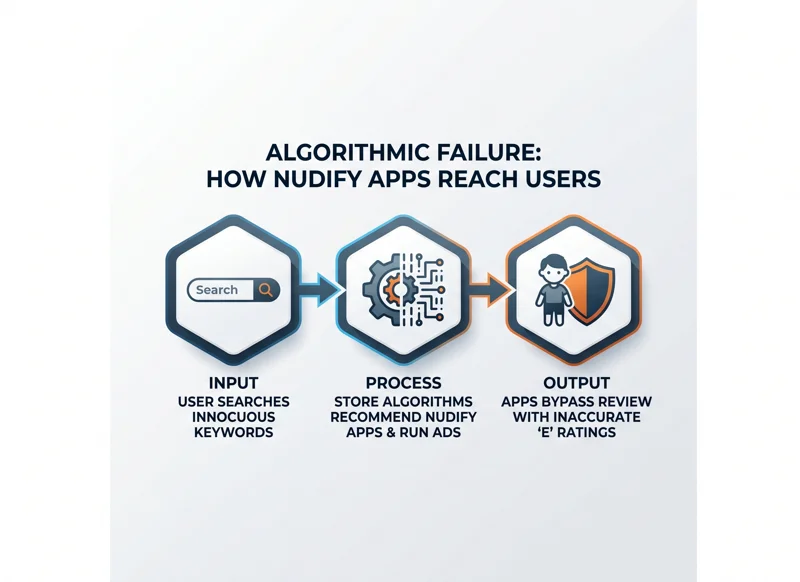
The core of this escalating crisis was recently brought to light by comprehensive research into App Store safety policies. Investigations revealed that searching for innocuous or vague terms often triggers recommendations for applications designed specifically to strip clothing from photos of real people. Even more alarming is the demographic these algorithms are exposing to such technology.
“The platforms are key participants in the spread of AI tools that can turn real people into sexualized images, often operating right under the noses of parents due to completely inaccurate age ratings.”
According to the findings, many of these malicious tools somehow bypass safety filters and are assigned an “E” for Everyone rating. This means that children and young teenagers can download software capable of generating graphic content without any parental gatekeeping. The failure of Apple’s review process and Google Play Store moderation highlights a fundamental flaw in how tech giants police AI-generated media.
| App Store Platform | Identified Problematic Apps | Primary Moderation Failure |
|---|---|---|
| Apple App Store | 18 Apps | Inaccurate “E” Age Ratings |
| Google Play Store | 20 Apps | Algorithmic Search Promotion |
| Both Platforms | Sponsored Placements | Running Ads for Banned Keywords |
The Financial Motivation: A $122 Million Scandal
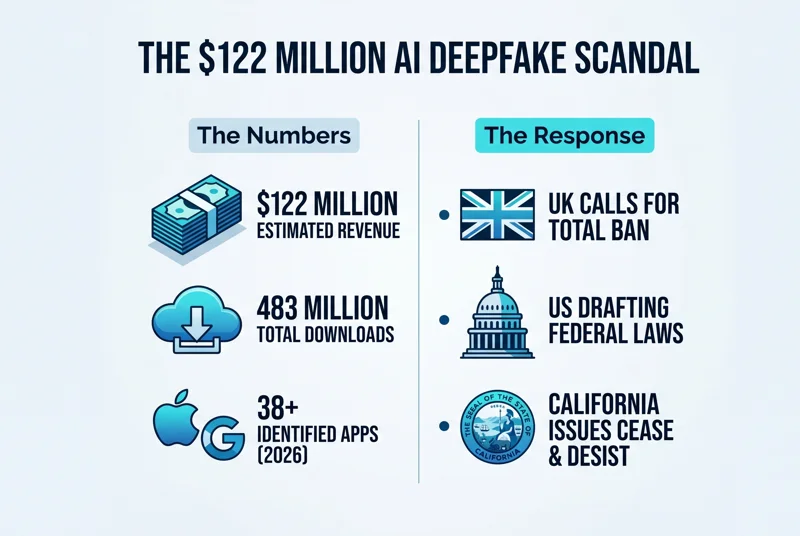
To understand why these apps persist, one must look at the staggering financials. The Tech Transparency Project report revealed that these applications are not just niche, underground tools; they are massive commercial enterprises. The developers of these nonconsensual AI image generators have successfully monetized exploitation, hiding behind freemium models and aggressive subscription tactics.
Collectively, these deepfake applications have been downloaded hundreds of millions of times. The revenue generated through in-app purchases and premium “processing” speeds heavily incentivizes developers to constantly re-upload banned apps under new names, playing a perpetual game of whack-a-mole with platform moderators.
| Metric | Estimated Data (Across Both Stores) |
|---|---|
| Total Downloads | 483 Million |
| Estimated Revenue | $122 Million |
| Primary Monetization | Weekly Subscriptions / Token Purchases |
“It’s not just that the companies are failing to appropriately review these apps; they are actively profiting from their presence while turning a blind eye to the profound ethical violations occurring on their servers.”
The Fallout and Legislative Response
The sluggish response from the tech industry has ignited a fierce backlash from international governments and child safety organizations. While both Apple and Google maintain that they strictly prohibit sexual or pornographic material, the evidence suggests their automated systems are entirely unequipped to detect sophisticated AI deepfake apps that mask their true purpose behind innocent-looking “photo editing” interfaces.
In response to public pressure, Apple recently confirmed the removal of 15 flagged applications, while Google announced a wave of suspensions pending further investigation. However, safety advocates argue that retroactive bans are insufficient. For comprehensive data on how tech policy is evolving to combat these threats, you can review the latest publications from the Tech Transparency Project.
| Region / Authority | Proposed Action / Legislation |
|---|---|
| United Kingdom | Calls for a total ban on AI deepfake apps that target children. |
| United States (Federal) | Drafting laws to criminalize the creation of explicit deepfakes. |
| State of California | Issuing cease and desist orders to tech platforms hosting AI generators. |
“Until app stores implement proactive, human-led review processes for AI photo manipulation tools, predatory developers will continue to exploit the algorithmic loopholes.”
As we move further into 2026, the battle between app store moderators and malicious AI developers continues to escalate. The responsibility now lies firmly on the shoulders of tech giants to overhaul their App Store safety policies and permanently sever the algorithmic pipelines that direct young users toward digital harm.
Frequently Asked Questions
What are “nudify” apps?
They are malicious AI-powered applications designed to digitally remove clothing from photos of real people, creating nonconsensual explicit deepfakes.
Why were these apps rated “E” for Everyone?
Developers often disguise these apps as standard photo editors or face-swapping entertainment tools to bypass automated app store age-rating algorithms.
How are Apple and Google directing users to these apps?
According to reports, platform search algorithms and sponsored ad networks have been caught suggesting these apps when users input specific keywords related to AI photo editing.
How much money have these apps made?
A 2026 report estimates that these deepfake applications have collectively generated approximately $122 million in revenue.
What are Google and Apple doing about it?
Both companies state they have strict policies against sexual content and have suspended or removed dozens of flagged apps, though critics argue their response is too slow and reactive.
Are these AI apps illegal?
The legality is rapidly changing. While the apps themselves might operate in a grey area by claiming to be “prank” tools, many jurisdictions are actively passing laws to criminalize the creation of nonconsensual explicit deepfakes.
How can parents protect their children from these apps?
Parents should regularly monitor their children’s app downloads, utilize built-in device parental controls to restrict app installations, and educate their children about the dangers of AI photo manipulation.
Disclaimer: This article is for informational purposes only. App store policies and governmental legislation regarding AI technology are subject to rapid change.