The tech industry is reeling in 2026 because after unveiling ridiculously expensive AR glasses snaps stock takes a dive. The long-awaited augmented reality wearable, known as Specs, failed to win over Wall Street during its debut.
Snapchat’s parent company has been working on this technology for over a decade. However, the initial market reception has raised massive red flags for tech investors and financial analysts alike.
Instead of sparking excitement, the hardware announcement caused an immediate sell-off, proving that hardware pricing remains a highly sensitive topic in the current economic landscape.
Market Reaction: After Unveiling Ridiculously Expensive AR Glasses Snaps Stock Takes A Dive
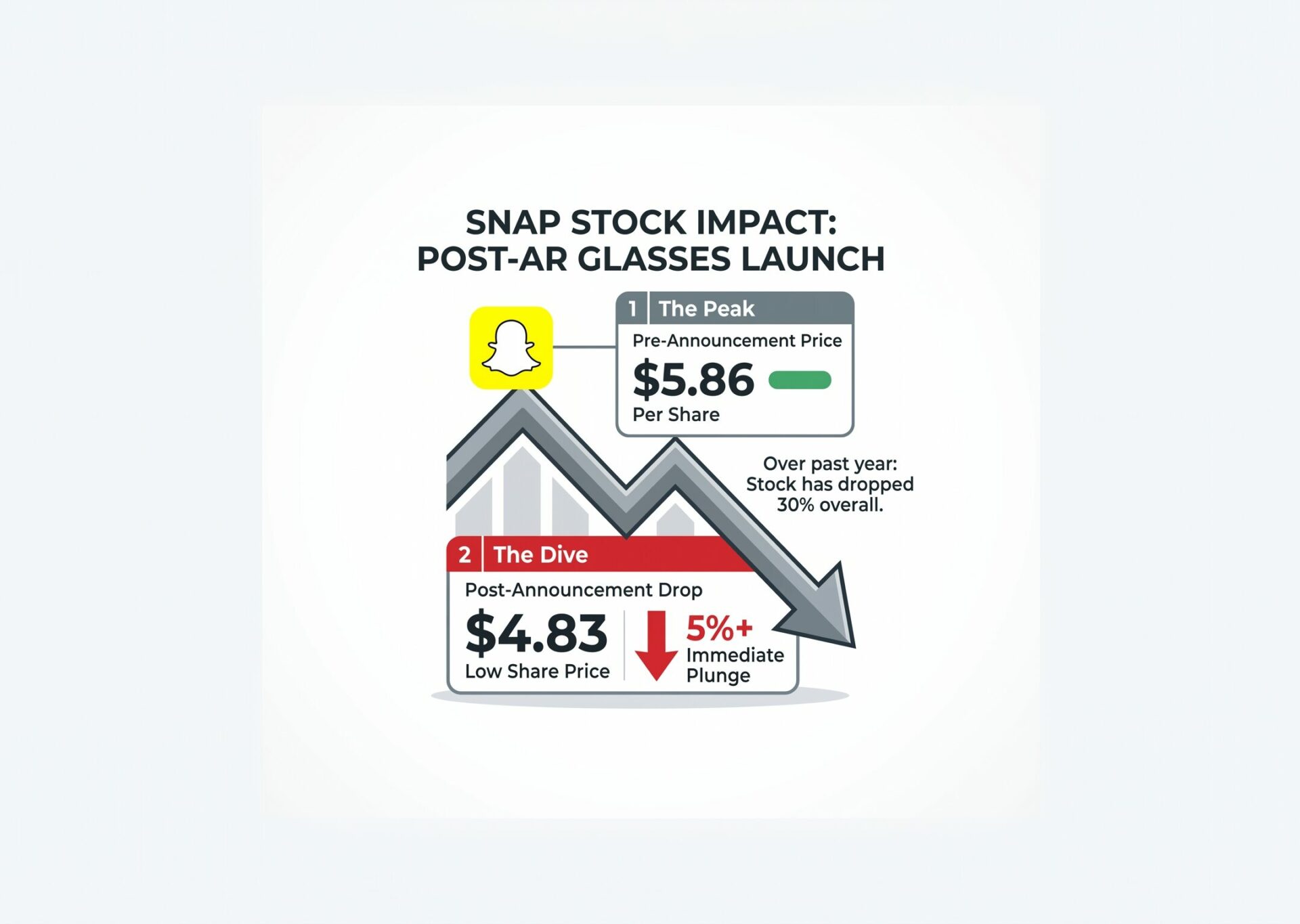
The primary headline of the week is how quickly the market responded negatively. Investors panicked immediately after unveiling ridiculously expensive AR glasses snaps stock takes a dive by over 5% in less than 24 hours.
Shares tumbled from $5.86 down to a painful low of $4.83. This drop compounds a broader, ongoing issue for the company, whose equity value had already eroded by 30% over the trailing twelve months.
Following Specs’ launch, the stock sank more than 5%, falling from $5.86 a share on Tuesday to a low of $4.83 on Wednesday morning.
The core worry driving this financial slide is the retail price tag. The smart glasses are set to hit the market at a staggering cost of nearly $2,200 per unit, a barrier most consumers cannot cross.
The Disconnect Between Pricing and the Core Teen Demographic
A central reason why after unveiling ridiculously expensive AR glasses snaps stock takes a dive is the massive demographic mismatch. Snapchat’s primary user base consists entirely of teenagers and young adults.
Industry experts openly wonder how many teenagers possess that amount of disposable income. This clear disconnect has forced stock market onlookers to openly question the true profitability path of the hardware project.
| Metric | Before Launch | After Launch |
|---|---|---|
| Stock Price Per Share | $5.86 | $4.83 (Low) |
| Immediate Percentage Drop | Baseline | Greater than 5% plunge |
| Annual Stock Trajectory | Gradual decline | Accelerated downward dive |
Evan Spiegel Defends the Strategy Behind the Immersive Computing Wearable
During an appearance on CNBC, CEO Evan Spiegel addressed the negative sentiment head-on. He firmly defended the premium strategy even though after unveiling ridiculously expensive AR glasses snaps stock takes a dive.
Spiegel argued that consumers should not view Specs as mere eyewear accessory alternatives. Instead, he framed the device as a fully functional, high-end portable computer built for the face.
The most important way to think of Specs is as a computer, and so they’re comparably priced to other high-end computers or high-end laptops.
According to executive leadership, the steep premium reflects the advanced components required to achieve spatial immersion without relying on heavy external processing pucks or bulky straps.
How Specs Compare Across the Mixed Reality Market Spectrum
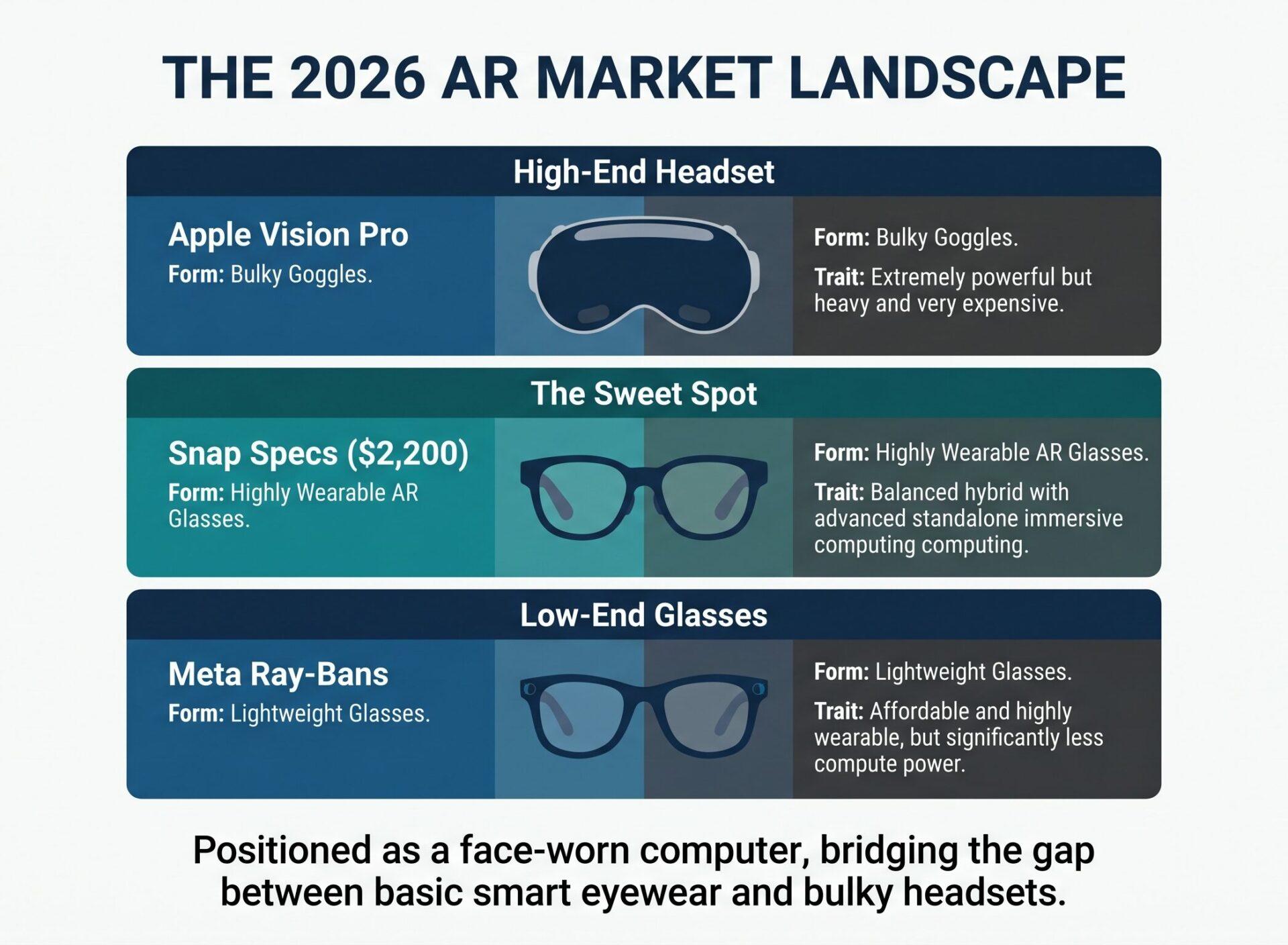
To justify the product’s positioning after unveiling ridiculously expensive AR glasses snaps stock takes a dive, Spiegel explicitly mapped out the current spatial landscape.
He noted that Specs occupy a completely unique sweet spot. They live directly between lower-tier options like Meta’s Ray-Bans and high-end headsets like Apple’s Vision Pro ecosystem.
| Product | Form Factor | Compute Power vs. Wearability |
|---|---|---|
| Meta Ray-Bans | Lightweight Glasses | Affordable but significantly less compute power |
| Snap Specs (2026) | Highly Wearable AR | Incredibly capable for immersive computing |
| Apple Vision Pro | Bulky Goggles Headset | Extremely powerful but heavy and very costly |
For more insights into the financial performance and market data of the company, check the official investor reports on Snap Investor Relations.
Future Outlook: Can the Hardware Gain Mainstream Profitability?
The ultimate question remaining is whether the stock can recover. Because after unveiling ridiculously expensive AR glasses snaps stock takes a dive, corporate strategy must shift toward proving long-term value.
If the hardware remains locked away at a luxury premium tier, the revenue generated might never offset the ten years of heavy research and development costs.
The company must convince enterprise developers or affluent enthusiasts that its spatial ecosystem offers experiences far superior to traditional mobile software applications.
Frequently Asked Questions
Why did Snap’s stock price drop so suddenly?
The drop happened immediately after unveiling ridiculously expensive AR glasses snaps stock takes a dive, as investors panicked over the high $2,200 price tag.
How much do the new AR Specs cost?
The smart glasses are expected to retail at a premium price of nearly $2,200 apiece.
Who is the primary target audience for Snapchat?
The platform’s core demographic consists heavily of teenagers, who generally lack the budget to purchase luxury AR hardware.
How did CEO Evan Spiegel justify the $2,200 cost?
He stated that Specs should be viewed as high-end wearable computers rather than standard smart glasses, making them comparable to premium laptops.
How much did the stock fall during the initial morning drop?
The equity value plummeted by over 5%, reaching a trading low of $4.83 a share down from $5.86.
How do Specs differ from Meta Ray-Bans?
According to management, Meta’s product is cheaper but offers vastly less compute power for immersive standalone AR applications.
Is the device as bulky as the Apple Vision Pro?
No, the company claims its design remains highly wearable while still delivering incredibly capable spatial processing capabilities.
Disclaimer: This article is for informational purposes only. Stock prices, market figures, and product specifications are subject to market volatility and corporate updates following the mid-2026 hardware announcement.