The highly anticipated A20 Pro chip should keep the iPhone 18 Pro series feeling cool, addressing one of the most pressing concerns for flagship smartphone users in 2026. As mobile processors become increasingly powerful, the immense heat generated by advanced CPUs and GPUs poses a massive challenge for tech giants. Consumers constantly demand faster performance, but nobody wants a device that overheats during extended use.
Thankfully, revolutionary changes in semiconductor packaging and structural architecture are arriving. Industry analysts confirm that the upcoming processor redesign is entirely focused on enhanced thermal dissipation. From new wiring layers to physical separation of memory components, the internal layout of the next-generation iPhone is completely transformed.
How the A20 Pro chip should keep the iPhone 18 Pro series feeling cool with WMCM
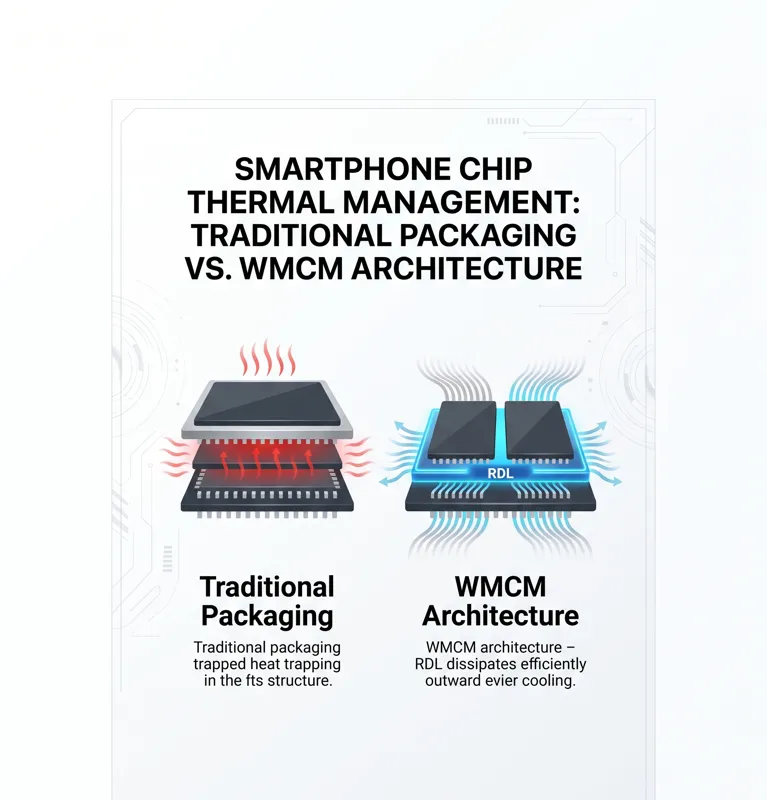
The primary reason the A20 Pro chip should keep the iPhone 18 Pro series feeling cool relies heavily on a brand-new structural design called the Wafer-Level Multi-Chip Module (WMCM). Previously, memory components and application processors were stacked in a way that trapped excess heat. The WMCM packaging changes this fundamentally.
With this new architecture, the application processor (AP) and the DRAM memory are placed side-by-side rather than stacked vertically. They are connected horizontally using a sophisticated Redistribution Layer (RDL). Moving the memory chip away from the AP drastically enhances thermal dissipation across the motherboard.
| Architecture Feature | Traditional Chip Packaging | WMCM (iPhone 18 Pro) |
|---|---|---|
| Component Placement | Vertically Stacked | Side-by-Side |
| Interconnect Method | Sub-substrate Layers | Redistribution Layer (RDL) |
| Thermal Efficiency | Moderate (Heat Trapping) | Exceptional Heat Dissipation |
“By eliminating the sub-substrate layer and utilizing a horizontal Redistribution Layer, Apple is effectively preventing the AP and memory from acting as a concentrated thermal trap.”
Vapor Chambers and Why the A20 Pro chip should keep the iPhone 18 Pro series feeling cool
Another major reason the A20 Pro chip should keep the iPhone 18 Pro series feeling cool is its seamless integration with advanced vapor chamber cooling systems. Apple first introduced liquid cooling chambers to its premium devices recently, and this technology acts as a double-duty defense mechanism against thermal throttling.
When the silicon gets too hot, the liquid water inside the chamber absorbs the excess thermal energy, boils instantly, and turns into vapor. This vapor travels to cooler areas of the chamber, releases the heat, and condenses back into liquid. This continuous cycle ensures that heavy tasks, like competitive gaming or high-definition video rendering, do not compromise battery health.
Gate-All-Around (GAA): Why the A20 Pro chip should keep the iPhone 18 Pro series feeling cool
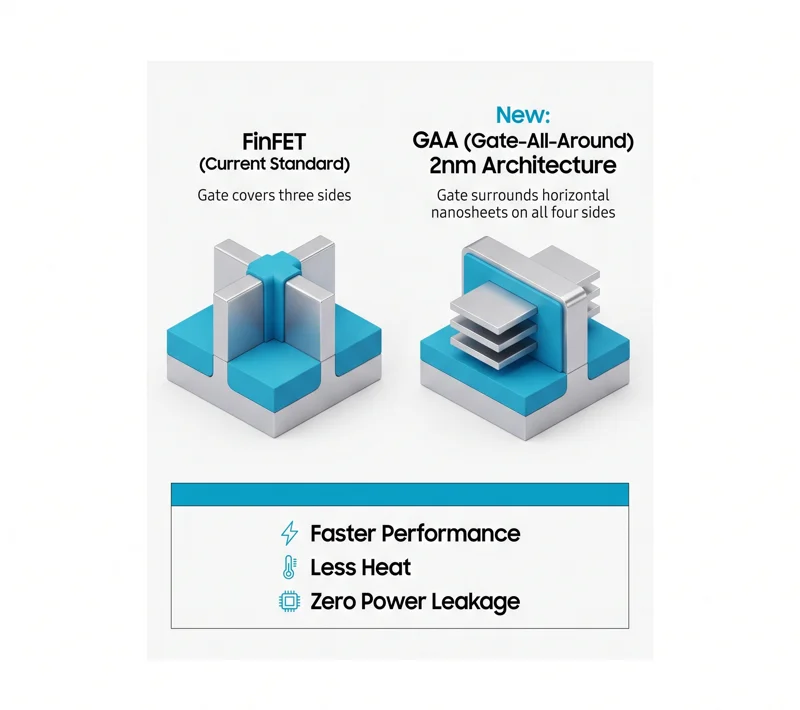
Beyond packaging, the actual silicon fabrication process is a massive leap forward. The fact that the A20 Pro chip should keep the iPhone 18 Pro series feeling cool is directly linked to the transition to a 2nm manufacturing process. This specific processor will be the first in the lineup to feature Gate-All-Around (GAA) transistor architecture.
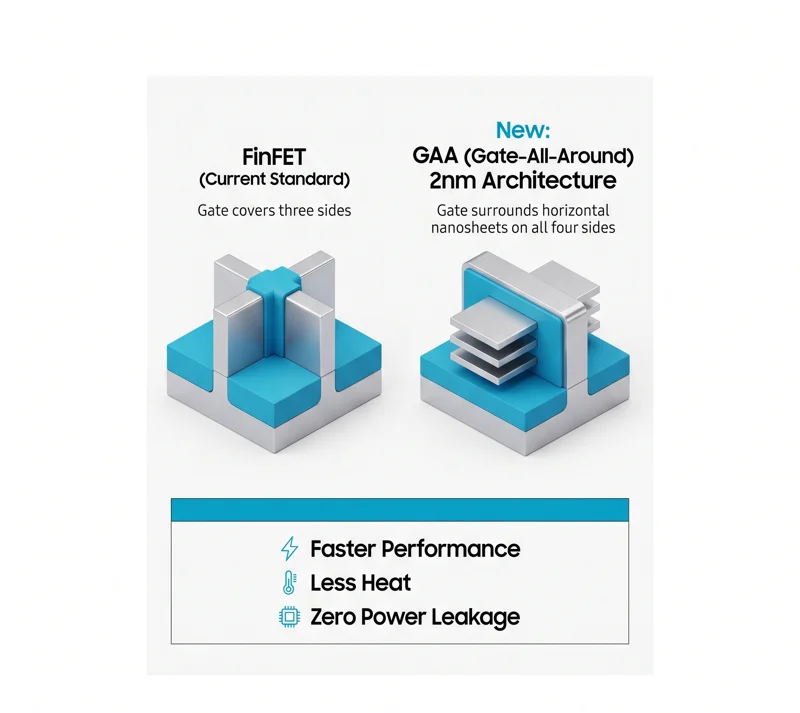
Unlike the older FinFET technology that only covered three sides of the channel, GAA uses horizontal nanosheets placed vertically so that the gate covers the channel on all four sides. This drastically reduces electrical current leaks and increases drive current efficiency. For official specifications on semiconductor advancements, you can review TSMC’s semiconductor node documentation.
| Transistor Technology | Gate Coverage | Performance Impact |
|---|---|---|
| FinFET Architecture | Three Sides | Standard leakage control |
| Gate-All-Around (GAA) | All Four Sides | Reduced leakage, higher drive current |
“The shift to Gate-All-Around architecture allows transistors to switch states significantly faster while generating a fraction of the thermal waste.”
Final Thoughts: The A20 Pro chip should keep the iPhone 18 Pro series feeling cool Under Load
Ultimately, the combination of WMCM horizontal packaging, dedicated vapor chambers, and 2nm GAA fabrication creates the perfect thermal storm. Mobile gamers and power users will finally have a device that sustains peak performance without burning their hands. We can confidently say that the A20 Pro chip should keep the iPhone 18 Pro series feeling cool during the most demanding workflows.
Frequently Asked Questions
Why exactly is the A20 Pro chip so important for thermal management?
The A20 Pro chip should keep the iPhone 18 Pro series feeling cool because it introduces a brand new 2nm node and Gate-All-Around (GAA) transistor architecture that drastically reduces power leakage.
What is the Wafer-Level Multi-Chip Module (WMCM)?
It is a new packaging design that places the application processor and the DRAM memory side-by-side rather than stacked, allowing heat to escape much easier.
How does the vapor chamber cooling system work?
It uses liquid inside a sealed copper chamber that absorbs processor heat, turns into vapor to spread the heat to cooler areas, and then condenses back to liquid in a continuous loop.
What is a Redistribution Layer (RDL)?
An RDL is an extra wiring layer that reroutes a chip’s input/output connection pads horizontally, making the chip thinner and easier to connect while reducing heat buildup.
How is Gate-All-Around (GAA) better than FinFET?
GAA covers the transistor channel on all four sides instead of three, which provides better electrical control, reduces power waste, and increases processing speed.
Will the iPhone 18 Pro still throttle during heavy gaming?
While all phones have physical limits, the combination of the vapor chamber and the fact that the A20 Pro chip should keep the iPhone 18 Pro series feeling cool means sustained gaming performance will be significantly better than older models.
When is the iPhone 18 Pro expected to launch?
Based on historical release cycles, the device featuring these new thermal technologies is anticipated to launch in the fall of 2026.
Disclaimer: This article is for informational purposes only. The hardware specifications and thermal technologies discussed are based on current supply chain reports and semiconductor industry analysis. Actual product features may vary upon official release.