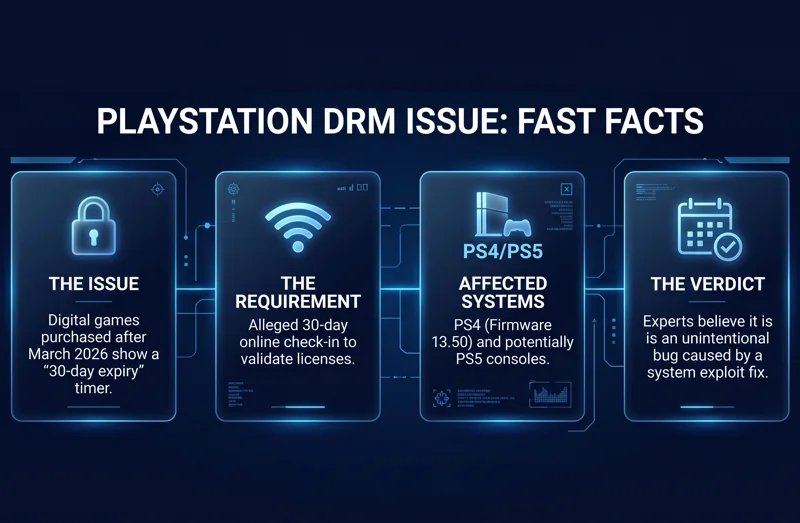
A surprise drm issue for digital playstation games has fans worried across the globe as reports surface regarding a restrictive new licensing requirement. Over the last 48 hours, the PlayStation community has been set ablaze by claims that Sony has quietly introduced a stringent form of Digital Rights Management (DRM) on both PlayStation 4 and PlayStation 5 consoles. According to technical enthusiasts and preservationists, a recent firmware update appears to impose a 30-day “expiry” on digital purchases, potentially rendering games unplayable if the console does not “check in” with Sony’s servers within that window.
The Discovery of the 30-Day Check-In Requirement
The controversy gained traction following a technical breakdown by prominent console modding creator “Modded Hardware,” who demonstrated that digital games purchased from March 2026 onwards on the PS4 (running firmware 13.50) now display an expiration date. This date mimics the behavior of PlayStation Plus titles, which require a subscription validation. However, these are full-price digital purchases that users expect to own indefinitely and play offline.
The alarm was further amplified by industry figures like Lance McDonald, who warned that this “hugely terrible DRM” would effectively remove a user’s license if they do not connect to the internet at least once every 30 days. This has sparked a massive debate regarding the ethics of digital ownership and the long-term viability of game preservation.
| Component | Reported Issue | Affected Systems |
|---|---|---|
| DRM Type | 30-Day License Expiry | PS4 (Firmware 13.50) & PS5 |
| Purchase Window | Games bought March 2026 – Present | Digital Store Purchases |
| Validation Requirement | Online server handshake every 30 days | All Internet-enabled consoles |
“If you buy a digital game and don’t connect your console to the internet for 30 days, your license will reportedly be removed until you re-authenticate.”
Is it a Planned Policy or an Unintentional Bug?
While the evidence of the UI displaying expiration dates is compelling, there is a strong possibility that this is a technical glitch rather than a malicious policy shift. Game preservation group DoesItPlay was able to replicate the issue but later shared insights from an anonymous insider suggesting the DRM issue is “unintentional.”
According to this insider, Sony may have inadvertently broken the licensing logic while attempting to patch a separate system exploit. The confusing User Interface (UI) that displays these expiry dates has allegedly been known to Sony for some time, but was previously viewed as a low-priority display bug. The current outcry, however, has forced a spotlight on the issue, as fans fear it represents a “dry run” for future digital restrictions.
| Scenario | Prospective Impact | Likelihood |
|---|---|---|
| Unintentional Bug | Temporary UI error; no actual game lockouts. | High (Insider reports) |
| Strategic Policy | Permanent shift to Always-Online digital checks. | Moderate (Consumer trends) |
| Accidental Break | Users actually locked out until a patch is issued. | Low to Moderate |
Concerns Over Digital Ownership and Preservation
Even if Sony confirms this is a bug, the incident highlights the fragile nature of digital libraries. For many, the idea that a purchased product can “expire” or requires a server’s permission to function is a step too far. Preservationists argue that if a console’s CMOS battery fails or Sony’s servers eventually shut down, decades of gaming history could vanish. This “surprise DRM” serves as a wake-up call for users who have transitioned to an all-digital lifestyle without considering the fine print of licensing agreements.
“The slow march to an all-digital, always-online future has already interfered with many of the control and ownership rights players have traditionally enjoyed.”
| Metric | Digital Ownership Risks |
|---|---|
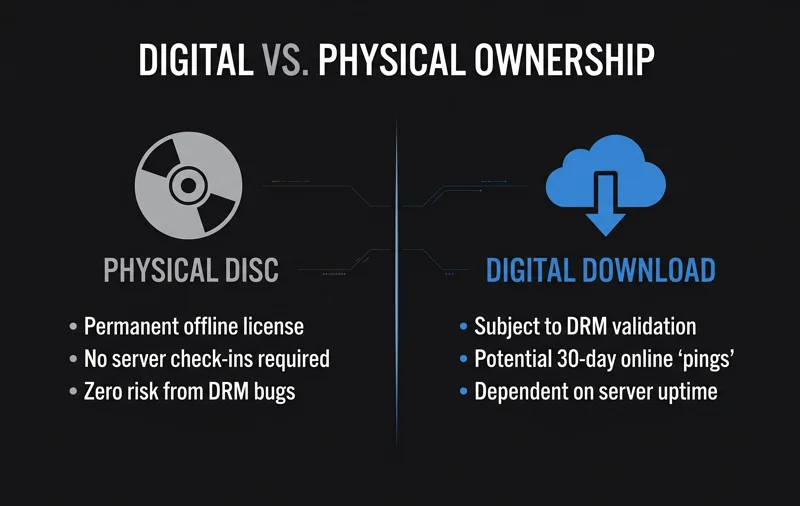
| Access Control | Dependent on platform holder server uptime. |
| Offline Play | Requires recurring license verification “pings.” |
| Legacy Support | Older firmware or hardware may lose validation support. |
Frequently Asked Questions
What is the 30-day DRM issue on PlayStation?
It is a reported issue where digital games purchased after March 2026 appear to have an expiration date, requiring the console to connect to the internet every 30 days to validate the license.
Which consoles are affected by this bug?
Reports currently specify PlayStation 4 consoles running firmware 13.50, though some preservation groups suggest the issue may also extend to PlayStation 5 consoles.
Has Sony officially confirmed this as a new policy?
No. As of late April 2026, Sony has not issued an official statement, though insiders suggest the issue is an unintentional bug caused by an exploit fix.
Will my digital games actually stop working after 30 days?
Currently, there is evidence that the UI shows an expiration, but there is no confirmed evidence of a user being fully locked out of a game once the timer reaches zero.
Does this affect physical disc versions of games?
No, physical discs contain their own license and do not require the digital server-side check-in that is causing concern for digital buyers.
How can I fix the expiration date on my games?
Connecting the console to the PlayStation Network (PSN) should theoretically refresh the license, though a permanent fix likely requires a future firmware update from Sony.
Why is the community so worried if it might just be a bug?
The community is concerned because even an “accidental” DRM implementation shows how easily platform holders can restrict access to content that users have paid full price for.
Disclaimer: This article is for informational purposes only and is based on community reports and insider leaks as of April 2026. Official verification from Sony is pending.