Unmasking the Mystery of the 121 Area Code
Have you recently received a perplexing call or text from a number starting with the 121 area code? If so, you’re not alone. This mysterious prefix has caused widespread confusion, leaving many to wonder about its origin and legitimacy.
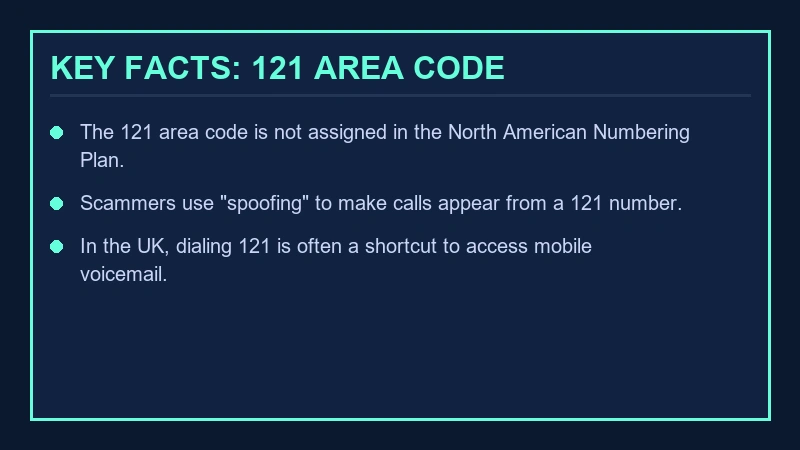
Let’s clear the air immediately: the 121 area code is not a standard, geographically assigned area code within the United States or Canada. It does not belong to any state, city, or province in North America.
This article will serve as your definitive guide, demystifying the 121 area code, exploring its various contexts, and arming you with the knowledge to protect yourself from potential scams associated with it.
The North American Numbering Plan (NANP) Explained
To understand why the 121 area code is invalid, we must first look at the system that governs phone numbers in North America. This system is called the North American Numbering Plan, or NANP.
The NANP is an integrated telephone numbering plan serving 20 countries, including the United States, Canada, and many Caribbean nations. The structure is simple: a three-digit area code followed by a seven-digit local number.
A fundamental rule of the NANP, overseen in the U.S. by the FCC, is that area codes cannot begin with a 0 or a 1. This rule was established to prevent confusion with country codes (like +1) and operator assistance (0). Since “121” begins with a 1, it is automatically disqualified from being a valid NANP area code.
If Not an Area Code, What Is It? Exploring the Possibilities
Since the 121 area code isn’t a legitimate US area code, its appearance points to other technological functions or, more often, malicious activities. People receiving these calls often start searching for answers, typing queries like “+121 which country” into their search engines, hoping for a simple answer.
The International Country Code Myth
One common point of confusion is whether 121 is a country code. When we see a number prefixed with a plus sign, like +121 area code, we instinctively think of international dialing. The “+1” is the country code for the NANP, but what about “+121”?
The simple answer to the search query “+121 which country code” is: none. There is no country assigned the +121 country code by the International Telecommunication Union (ITU), the body that manages these assignments. A search for a “+121 code country” will yield no results because such a designation does not exist in the global telephone system.
This confirms that any call appearing to be from a +121 code is not a legitimate international call from a recognized country. The number is being manipulated.
The Real Use: USSD and MMI Service Codes
The most likely legitimate use of the number “121” is not as an area code but as a service code. These are known as Unstructured Supplementary Service Data (USSD) or Man-Machine Interface (MMI) codes. You’ve likely used them without even realizing it.
These are short codes used to communicate directly with your mobile service provider’s network, not to call another person. They often begin and end with symbols like `*` or `#`. A prime example is a code that might look like *121* followed by other digits and a # symbol. In many countries, this format is used to check account balances, redeem vouchers, or activate services.
Similarly, you might encounter a code like ##121#. These are commands sent to your carrier. Because these codes are prevalent in many parts of the world, especially for prepaid mobile services, scammers can leverage this familiarity to create confusion and exploit unsuspecting individuals.
Key Differences: Geographic Area Codes vs. Service Codes
Understanding the distinction between a real area code and a service code is your first line of defense. The following table breaks down the crucial differences, providing clarity on what you’re dealing with when you see the 121 area code.
| Feature | Geographic Area Codes (NANP) | USSD/MMI Service Codes |
|---|---|---|
| Purpose | To route long-distance calls to a specific geographic region (e.g., city, state). | To send commands to a mobile network provider (e.g., check balance, top up). |
| Format | A 3-digit number where the first digit is 2-9. Example: (212), (310), (800). | A short code, often enclosed by * and # symbols. Example: *121#, *135#, #100#. |
| How It’s Used | Dialed before a 7-digit local number to make a call. | Entered into the phone’s dialer and “called” to execute a command. A message usually pops up in response. |
| Source | Assigned by regulatory bodies like the FCC and NANPA. | Programmed and managed by individual mobile network carriers (e.g., AT&T, Vodafone). |
| Common Confusion | Mistaking a new or unfamiliar area code for a scam. | Seeing a code like 121 in a text message and thinking it’s part of a 121 area code usa number. |
The Dark Side: Scams Exploiting the 121 Area Code
The primary reason most people search for the 121 area code is due to receiving an unsolicited call or text. Scammers love using invalid or non-existent area codes because it adds a layer of confusion and urgency that they can exploit.
They use a technology called “caller ID spoofing.” This allows them to manipulate the information that appears on your caller ID, making a call from anywhere in the world look like it’s coming from the 121 area code.
Common Scams to Watch Out For
- The Wangiri (One-Ring) Scam: This is the most common tactic. Your phone rings once, then hangs up. The scammer’s goal is for your curiosity to get the better of you, prompting you to call the number back. When you do, you are connected to a premium-rate international number designed to drain your wallet for every second you stay on the line.
- Phishing and Smishing Scams: You might receive a text message (smishing) from a number with the fake 121 area code. The message will contain an urgent prompt, such as “Your account has been compromised” or “You’ve won a prize,” with a link to a malicious website designed to steal your personal information.
- Tech Support Scams: A caller from a spoofed 121 area code number may claim to be from a well-known tech company like Microsoft or Apple. They will falsely report a virus on your computer and attempt to gain remote access or sell you worthless security software.
The ambiguity of the prefix is the key. When a potential victim sees an unfamiliar number, their first instinct is often to investigate, which is exactly what the scammers are counting on. The appearance of the 121 area code is a major red flag.
Your Action Plan: How to Respond to a 121 Call
Now that you know the 121 area code is not legitimate, you can formulate a clear and effective response plan to protect yourself and your finances. Knowledge is power, and being prepared is your best defense.
Follow these simple but critical steps whenever you see this number on your screen.
- Do Not Answer: The simplest rule is the most effective. If you don’t recognize the number, and especially if it has an invalid prefix like the 121 area code, let it go to voicemail. Legitimate callers will leave a message.
- Absolutely Do Not Call Back: Resist the urge to call back a one-ring call. This is the main trigger for the Wangiri scam. Calling back is what costs you money.
- Block the Number: Immediately after the call, use your phone’s built-in features to block the number. This will prevent them from contacting you again from that specific spoofed number. For more help with your device settings, you can check resources at the Mobile Services Center.
- Report the Incident: Report the scam call to the Federal Trade Commission (FTC) via their complaint assistant and the Federal Communications Commission (FCC). This helps authorities track and combat these fraudulent operations.
- Delete and Disregard Texts: If you receive a text message from the 121 area code, do not click any links or reply. Delete it immediately. Replying, even with “STOP,” only confirms your number is active, inviting more spam.
By adhering to this protocol, you can effectively neutralize the threat posed by scammers using the phantom 121 area code.
Global Context: Where 121 Is a Real Service Number
While the 121 area code is fake in North America, the number 121 does have legitimate uses elsewhere in the world, which can add to the confusion.
For example, in the United Kingdom, dialing “121” is a common shortcut to access voicemail services on some mobile networks. In India, “121” is often used as a dedicated customer care number for certain telecom providers.
It’s crucial to differentiate these uses. These are short service codes dialed within a specific country’s network. They are not an area code used for placing calls between different regions, and they are completely unrelated to the fraudulent calls targeting North American residents from a spoofed 121 area code.
Conclusion: Stay Vigilant, Stay Safe
The mystery of the 121 area code is now solved. It is not a real geographic area code in the US or Canada, and any call you receive from it is almost certainly a scam attempt using caller ID spoofing.
Remember the key takeaways: NANP area codes don’t start with 1, the +121 country code doesn’t exist, and the number’s most common legitimate use is as a USSD service code in formats like *121#.
By staying informed and skeptical, you can easily recognize and dismiss these fraudulent attempts. Never let curiosity compromise your security. When you see the 121 area code, your best move is no move at all—simply ignore, block, and report.
Frequently Asked Questions
Is the 121 area code a real area code in the USA?
No, the 121 area code is not a real or assigned geographic area code in the USA or anywhere in the North American Numbering Plan. Area codes in this system cannot start with the number 1.
Why did I get a call from the 121 area code?
You likely received a call from a scammer using “caller ID spoofing” to disguise their real number. They use fake, non-existent area codes like 121 to create confusion and trick you into answering or calling back.
What should I do if a 121 number calls me?
Do not answer the call. If they don’t leave a voicemail, block the number immediately. Never call the number back, as it may be a premium-rate number designed to charge you money.
Can a text from the 121 area code be dangerous?
Yes. Texts from a 121 number are likely “smishing” (SMS phishing) attempts. They will contain malicious links designed to steal your personal information or install malware on your device. Do not click any links and delete the message.
Is +121 a country code?
No, +121 is not a valid country code. The International Telecommunication Union (ITU) has not assigned +121 to any country. Any call appearing from this code is spoofed.